
A Prescription for Good Health in Rural Vermont
In the summer of 2019, Little Rivers Health Care faced a dilemma. Many of their chronically ill patients were struggling to locate healthy foods close to their rural communities.
Maureen Boardman, a family nurse practitioner and doctor of nursing practice at LRHC, reached out to Willing Hands for help. Working with Jim McCracken and Gabe Zoerheide, Maureen developed a plan to distribute food to the patients in the LRHC practice. The Food Farmacy program was modeled after one Maureen learned about in inner-city Philadelphia. Little Rivers’ program began modestly. Using her personal car, Maureen picked up 200 to 400 pounds of fresh produce from Willing Hands weekly and transported it back to the Little Rivers clinics for distribution. When COVID struck in the spring of 2020, the LRHC care coordinators also joined in and, using their personal vehicles, hand delivered bags of food and fresh produce sourced from Willing Hands to the homes of patients in need.
Within the next few years, what began as an improvised response morphed into the well-organized Food is Medicine project. The clinics within Little Rivers Health Care’s practice area—Bradford, East Corinth, Wells River, and Newbury, Vermont—boasted well-stocked food shelves and Food Farmacy produce bags. The Little Rivers region is often considered Vermont’s largest food desert. But Little Rivers Health Care providers are committed to addressing the dual challenges of chronic disease and food insecurity.
In collaboration with the Bi-State Primary Care Association and Dartmouth’s Center for Advancing Rural Health Equity, LRHC has set out to screen and identify patients who would benefit from improved access to nutritious, medically supportive food. These patients are then invited to participate in the Food is Medicine project. They are encouraged to pick up a box of shelf-stable food each week and a tri-weekly Food Farmacy tote bag of fresh local produce, provided primarily by Willing Hands.
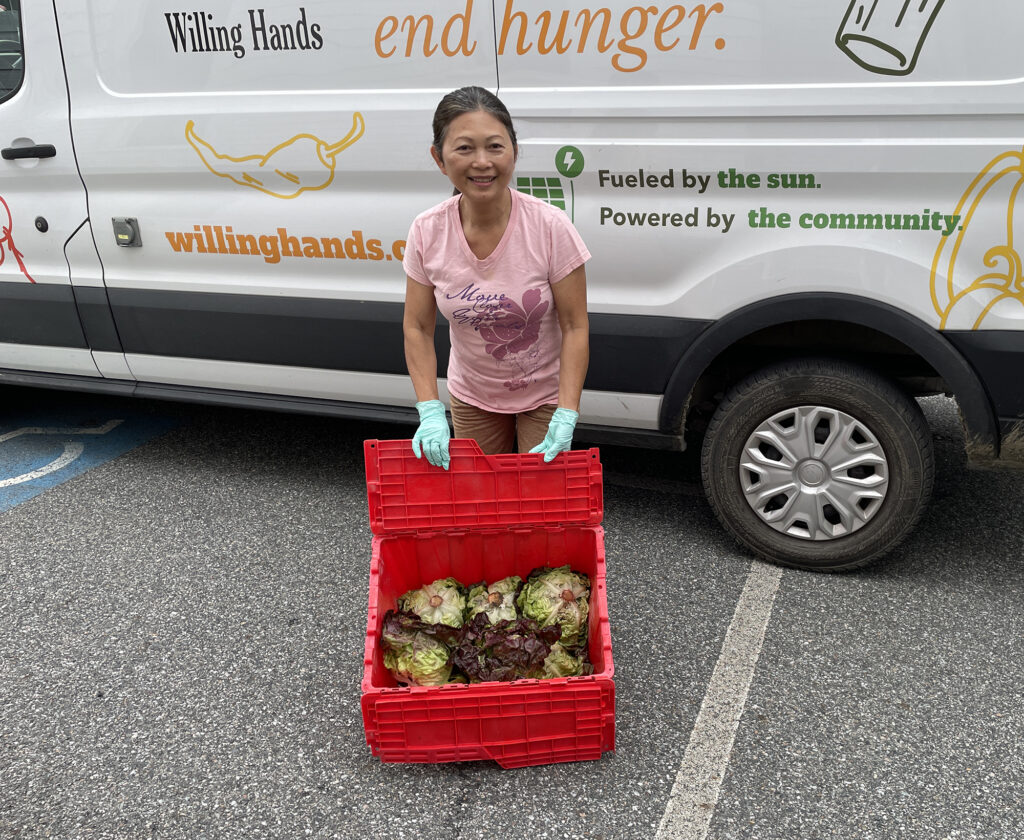
“We’ve had an incredible partnership with Willing Hands during the last six years,” says Maureen. “Many of our patients don’t have access to a working car; they can’t get to the Haven, and local food shelves have very limited hours and selections. With Willing Hands support, the Food Farmacy has been able to serve patients a wide variety of fresh food locally year-round. As a result, Little Rivers Health Care has been able to improve the health and welfare of these patients just by providing nutritious food.”
Produce by prescription yields results.
“When you come to our Food Farmacy, you’re getting food to support your health,” says Ashleen Buchanan, manager of community relations and grants. “Everything we receive from Willing Hands fits into our ‘produce by prescription’ mission.”
The Food is Medicine project now serves 91 patients with chronic illness and food insecurity and tracks how they’re responding. Some of the patients have been participating for years, and the results have been consistently positive.
“The medical model typically prescribes medicine not food,” says Ashleen. “But by using food as medicine in our clinics, we are seeing improved biometrics (such as improved blood pressure, cholesterol and BMI readings, and stabilized blood glucose levels) in enrolled patients who are at risk for heart disease and diabetes, and we are tracking these results over time. We are the only program in the Bi-State program that tracks these metrics.”
Ashleen adds that everyone at LRHC is grateful for Willing Hands’ involvement in the initiative. “Willing Hands has made this program what it is. They helped spur us into action and have been our largest partner by far.”
Volunteers are vital to the Food Farmacy
Making Food Farmacy possible requires careful stewardship, with Emilie Perry, program coordinator, leading the logistics. Emilie manages a team of volunteers who meet at the Congregational Church in Bradford every Friday to receive the distributions from Willing Hands, typically 600 to 1,000 pounds of local fresh produce depending on the season. The church kindly provides its kitchen for the sorting and bagging of the deliveries into totes and houses coolers where LRHC can store excess produce.
Marcey arrives first and volunteers to deliver Root 5 Farm produce that LRHC procures through five CSA shares. When the Willing Hands truck arrives shortly after 10, Emilie is prepped to receive them. She has totes arranged on all the flat services and boxes on the side for deliveries to the clinics, each on a three-week rotation to receive Food Farmacy deliveries.
Emilie and the other volunteers this week, Twig and Sol, are delighted with the delivery from Willing Hands.
“It’s such a joyful thing to be able to offer this fresh produce—strawberries, lettuce, and so on—to people who really need it,” notes Emilie. “We love the variety, the quality from Willing Hands. Our participants are so happy with all the local food they are receiving.”
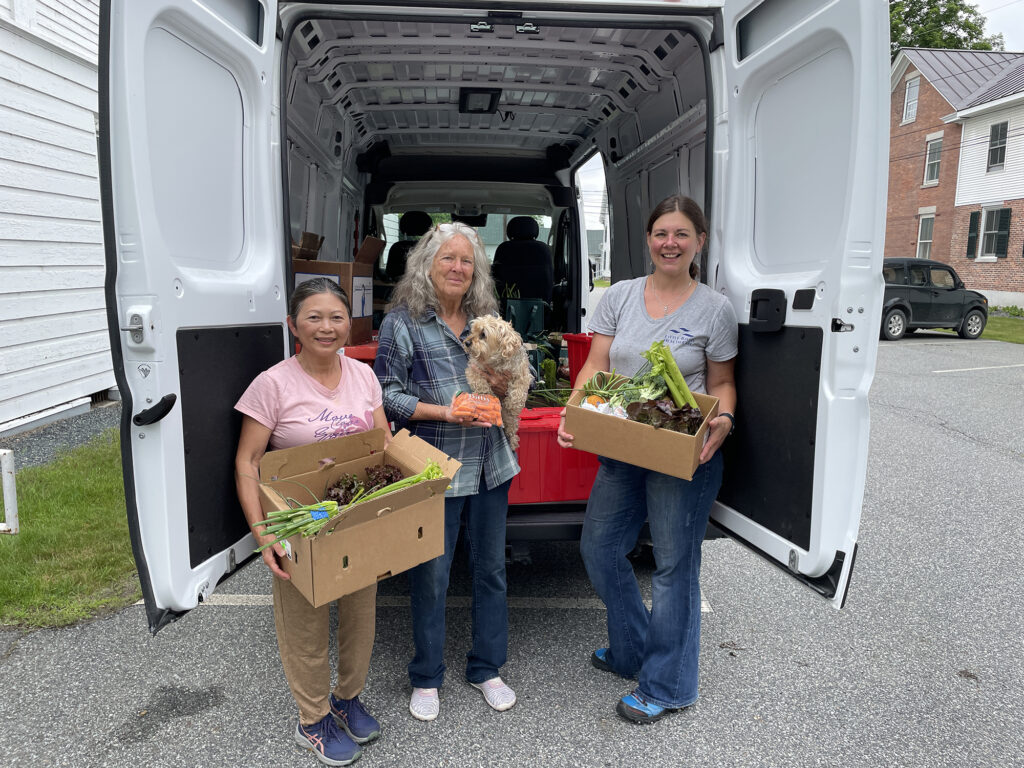
Quietly, quickly, and methodically, the volunteers circle the kitchen counters and balance the contents of each tote bag and box. Small discards go to local chickens. Nothing goes to waste. In less than an hour, they unpack and sort the crates. The full totes and boxes are carried to the Food Farmacy van, made possible through the generosity of Hannaford.
Twig, who is friends with Emilie outside the initiative, says she volunteered to help with the program because she wanted to join in. “I thought this is something that I can do to help my neighbors, and wow, the bags are going to be beautiful today.”
Emilie agrees. “I worked as a farmer before taking on this project, and knew Gabe and Willing Hands in that capacity. They’ve impressed me with their dedication to supporting local farmers and promoting food security. The Food Farmacy program is a perfect outgrowth of that alliance of values and allows our medical providers to practice what they preach: by offering healthy, local food to patients and encouraging them to make good choices.”